Integrated Reef Fisheries Lab
Building collaborative data-driven solutions to enhance the sustainability of reef fisheries and aquatic food systems now and into the future.
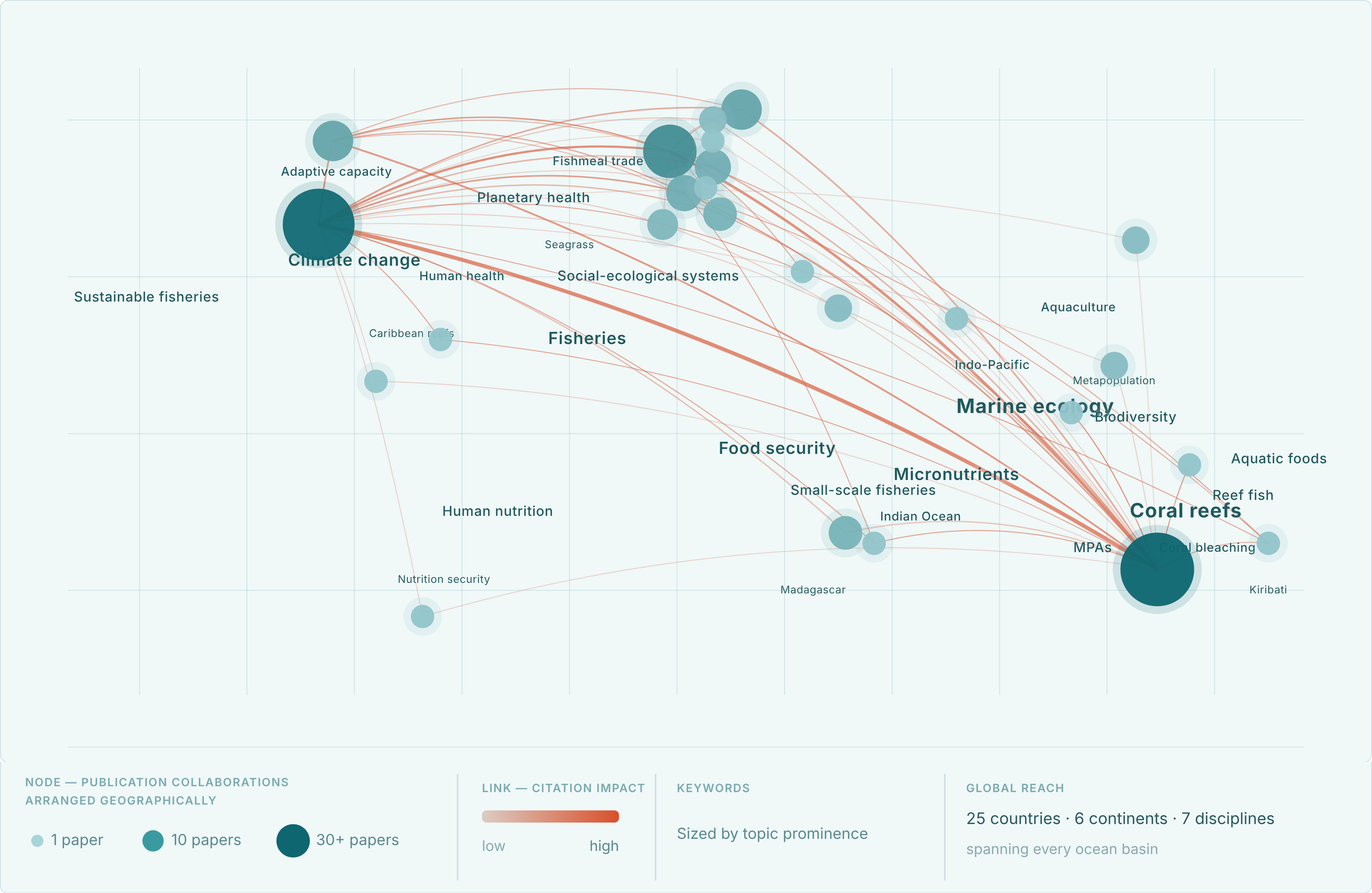
The most pressing challenges facing marine socio-ecological systems, from coral reef degradation and food insecurity to the future of aquatic food systems, cannot be solved by any single lab, institution, or discipline. They demand collective intelligence, interdisciplinary expertise, and diverse perspectives.
At the Integrated Reef Fisheries Lab, collaboration is central to how we work, and we are continually growing our global network of collaborators across disciplines, institutions, and sectors. We build on partnerships that connect research with practice, from active academic affiliations with Harvard T.H. Chan School of Public Health and Lancaster University to collaborative work with coastal communities across the tropics (e.g., Papua New Guinea and Madagascar) and student projects spanning institutions and countries (e.g., James Cook University, Australia). We also value engagement beyond academia, through capacity building and science communication (e.g., ClimArts Fragmented Film), and by working with closely communities, governments, NGOs, industry, and conservation practitioners to ensure our research is visible, informed by diverse perspectives and contributes to real-world solutions.
We welcome opportunities to connect with people and organisations worldwide who share our commitment to healthier marine ecosystems, more sustainable and equitable aquatic food systems, and thriving societies. We believe that working together across disciplines, borders, and sectors is essential to creating lasting impact.